

Massive NBN Speed Boost Upgrades Have Happened. Did You Even Notice?
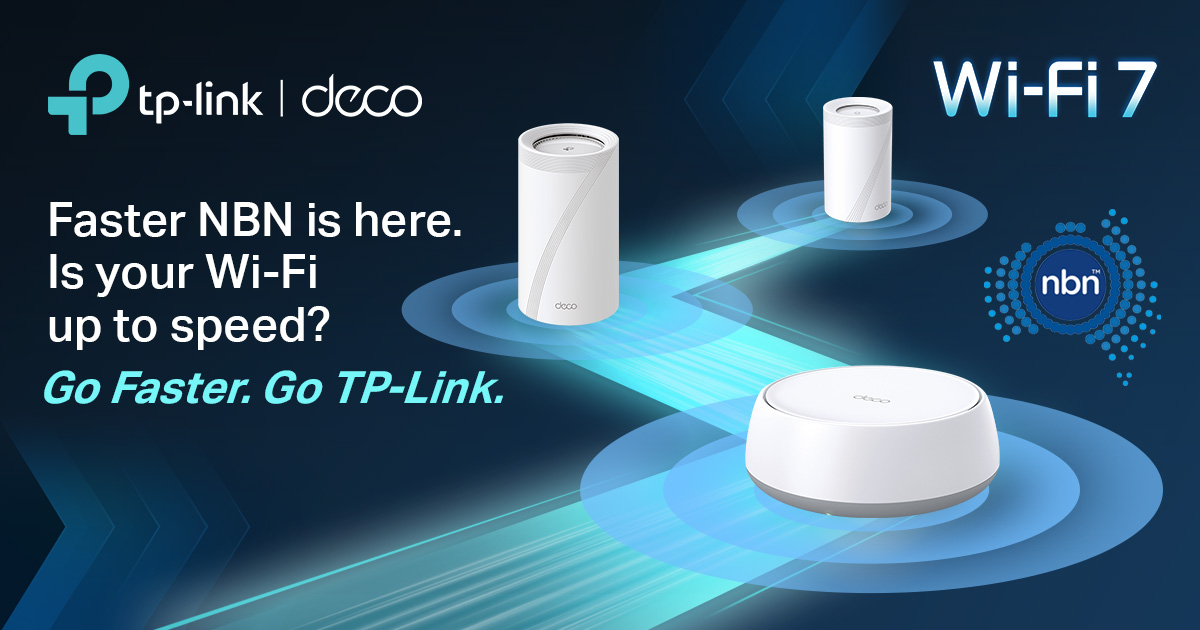
On September 14th, 2025, the National Broadband Network (NBN) officially rolled out higher speed tiers across Australia. For millions of households, this marked the most significant internet speed upgrade since the network’s inception, offering faster downloads, boosted upload rates, and even the introduction of multi-gigabit speed tiers.
But if you didn’t notice a dramatic improvement in your day-to-day internet, gaming or streaming performance, you’re not alone. The reason might not be your NBN connection itself, but likely your current home network hardware. Many Australians are still running older routers, outdated Wi-Fi standards, or low-end devices that physically can’t handle the new speeds now available.
What’s Actually Changed with the NBN?
As of mid-September, the NBN boosted its key speed tiers nationwide:
- Home Fast increased from 100/20 Mbps to approximately 500 Mbps download / 50 Mbps upload.
- Home Superfast jumped from roughly 250/25 Mbps to around 750 Mbps download / 50 Mbps upload.
- Home Ultrafast received a tweak that now delivers up to 1 Gbps download / 100 Mbps upload.
- And for the first time, Home Hyperfast launched, offering a staggering 2 Gbps download for eligible Fibre to the Premises (FTTP) and Hybrid Fibre Coaxial (HFC) connections.
This upgrade has fundamentally changed what’s possible for Australian households and businesses. It enables a larger number of devices to simultaneously experience faster streaming, seamless video calls, ultra-low-latency gaming, and multi-user performance that once seemed out of reach.
However, the benefits are only noticeable if your in-home network can actually deliver those speeds.
Why Many Households Haven’t Felt the Upgrade
For many Australians, the NBN upgrade has technically already arrived, but the performance hasn’t. The culprit? Outdated networking gear.
- Older Wi-Fi standards are the biggest bottleneck
Many routers in homes today still operate on Wi-Fi 4 (802.11n) or Wi-Fi 5 (802.11ac). While these standards were fine years ago, they can’t handle multi-gig speeds or efficiently manage multiple devices at once. Even Wi-Fi 6, although fast, can struggle to fully utilise a 2 Gbps connection under heavy load. - 100 Mbps ports limit throughput
A surprising number of older routers and modems still use 100 Mbps LAN or WAN ethernet ports. This means even if your NBN plan now supports 500 Mbps or more, your hardware physically caps your connection well below that. - Single-router setups create dead zones
Traditional single-router systems can’t provide consistent signal strength throughout modern homes. Walls, distance and interference reduce speed dramatically as you move away from the router, meaning you might never reach the speeds your NBN connection is capable of. - Device compatibility limits real-world speed
Even if your plan supports gigabit or multi-gigabit speeds, older laptops, phones and smart devices might only support legacy Wi-Fi standards or slower Ethernet ports. Your network will only perform as well as its weakest link. The same goes for the opposite scenario. Using the latest smartphone or laptop won’t yield better speeds if the underlying network technology is underperforming.
How TP-Link Wi-Fi 7 and Deco Mesh Unlock the True NBN Experience
The solution to getting the most from the NBN upgrade lies in modern networking technology. And TP-Link’s latest Wi-Fi 7 routers and Deco Mesh systems have been designed precisely for this new era of broadband performance.
What Wi-Fi 7 Brings to the Table
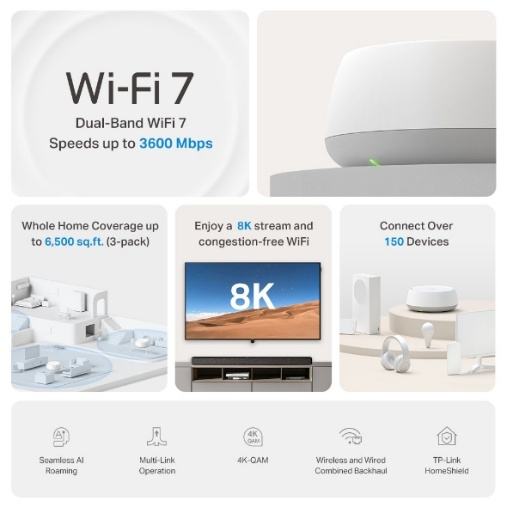
Wi-Fi 7 (802.11be) is the most advanced wireless standard yet. It dramatically increases bandwidth and efficiency, reduces latency and allows multiple devices to use multiple frequency bands simultaneously. That means smoother video streaming, faster downloads and lag-free gaming on multiple devices, all at once.
With Wi-Fi 7, homes can finally make full use of the new NBN speeds, including the new 2 Gbps Home Hyperfast tier, without the typical congestion or slowdowns that older routers introduce.
Why TP-Link’s Deco Mesh Systems Are the Perfect Match
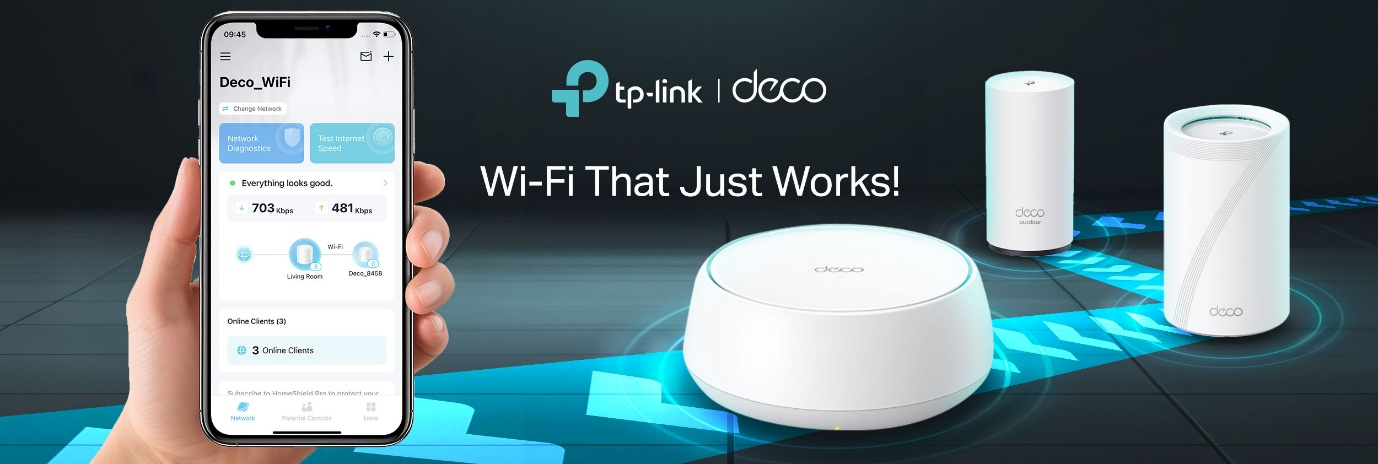
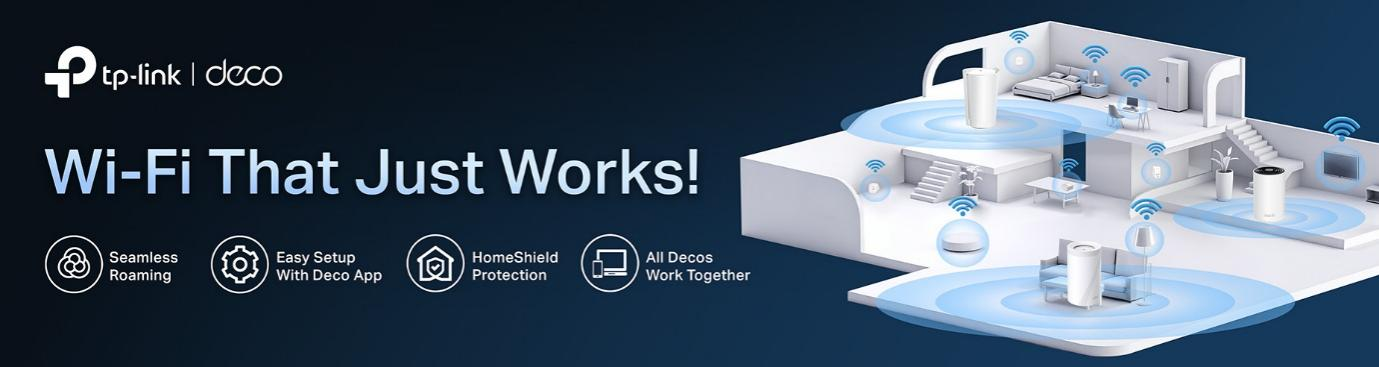
TP-Link’s Deco Mesh systems create a single, seamless Wi-Fi network across your entire home. Instead of one router struggling to reach every corner, multiple Deco units work together to deliver full-speed coverage in every room, with devices automatically connecting to the strongest signal.
This means:
- No more Wi-Fi dead zones.
- Consistent gigabit-plus speeds in every room.
- Smoother multi-device performance for families, home offices and smart homes.
Whether you’re on the new 500 Mbps, 1 Gbps or 2 Gbps plan, a Wi-Fi 7 Deco Mesh system ensures you can experience the upgrade to its fullest.
Real-World Improvements You’ll Notice Using TP-Link’s Wi-Fi 7 Devices
With the NBN upgrade and a TP-Link Wi-Fi 7 network in place, the difference is immediately noticeable:
- 4K and 8K streaming happens instantly, with no buffering.
- Online gaming feels faster and more responsive, even during peak hours.
- Video calls and remote work are smoother and more reliable.
- Smart home devices respond faster and more consistently.
- Uploads and cloud backups happen in a fraction of the time.
- Consistent performance even as you continue to add more devices.
It’s not just about higher speeds on paper; it’s about a dramatically better online experience across every device in your home that’s instantly noticeable.
How to Check If You’re Ready
If you haven’t noticed a speed boost since September, here’s what to do:
- Check your NBN plan: Log in to your provider account to see what tier you’re currently on. If it’s Home Fast or higher, you should already have faster speeds available.
- Run a speed test: Use a wired connection to your PC or laptop to see your actual download and upload rates. If you’re getting less than expected, your hardware might be the bottleneck.
- Inspect your router: Look at the back ports. If they’re labelled “100 Mbps” or “10/100” it’s definitely time to upgrade.
- Check your Wi-Fi generation: If your router isn’t Wi-Fi 6 or Wi-Fi 7, it can’t fully utilise the new NBN performance. If your device mentions 802.11b or Wireless N anywhere, you’re long overdue.
- Consider mesh networking: If your speeds drop off in certain rooms, or you have a large multi-level home or possibly a separate dwelling where one device doesn’t cover that distance, then a TP-Link Deco Mesh system will solve that instantly.
Recommended TP-Link Wi-Fi 7 Solutions for Faster NBN Performance
To get the full benefit of the NBN’s new faster speeds, TP-Link’s Wi-Fi 7 lineup offers the best way to upgrade your home network with options for every home and budget. Choose between Deco Mesh Systems for whole-home coverage, or Archer Routers for standalone power and easy expansion.
Mesh Systems: TP-Link Deco for Seamless Whole-Home Coverage
TP-Link’s Deco Wi-Fi 7 Mesh Systems deliver fast, consistent coverage across your entire home. Multiple Deco units work together to create one seamless network with no dropouts, no dead zones and no manual switching.
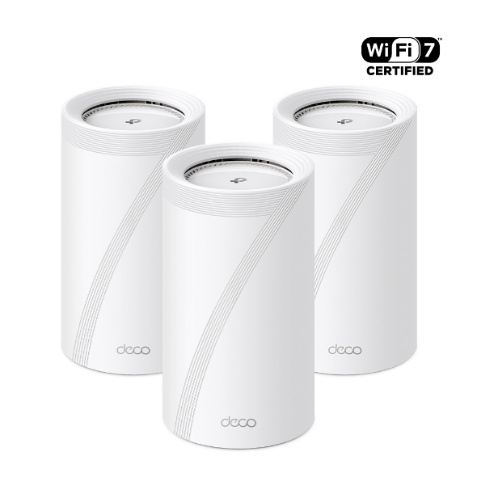
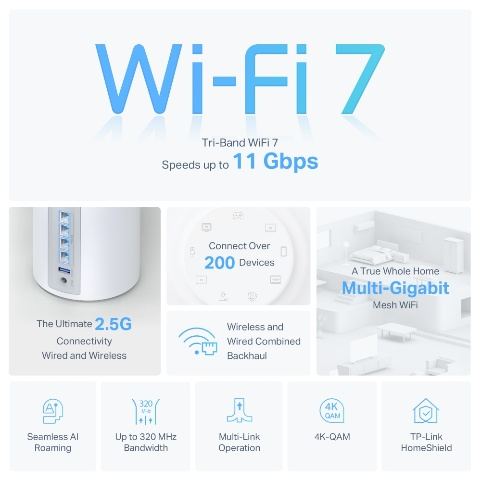
Deco BE85 (Top Tier) – A tri-band powerhouse built for large homes, multi-level properties and heavy device usage. Ideal for those wanting maximum speed and futureproofing with 10G Ethernet connectivity and the very best Wi-Fi 7 performance.
 |  |
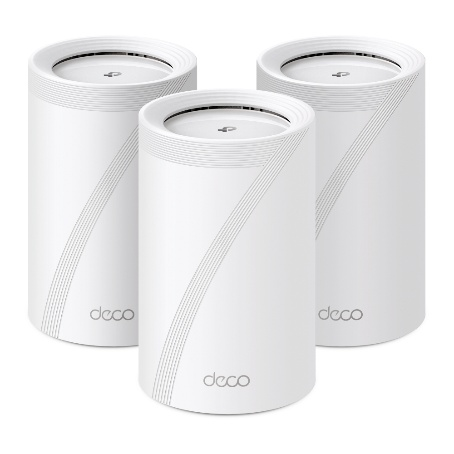
- Deco BE65 (Mid-Level) – A tri-band mesh system that balances high performance and affordability, perfect for medium to large homes wanting the benefits of Wi-Fi 7 without compromise.
- Deco BE22 (Entry Level) – An enhanced dual-band Wi-Fi 7 system offering a great-value entry point into next-generation mesh networking for smaller homes or multi-room apartments.
 |  |
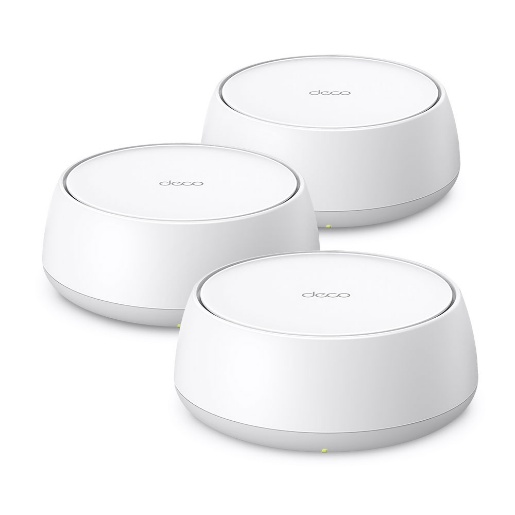 |  |
All Deco models work together, old or new, across different speeds and device types. This means you can expand your network anytime without replacing your existing units, saving money while keeping your setup future ready.
Standalone Routers: Archer Series for Powerful, Flexible Wi-Fi
For those preferring a simple single-router setup, TP-Link’s Wi-Fi 7 Archer Routers deliver next-generation performance that can also expand easily when needed.
- Archer GE800 / BE800 (Top Tier) – Tri-band Wi-Fi 7 routers built for gamers and power users. Designed for ultra-fast speeds, ultra-low latency, long range and multi-gig connectivity. Gaming enthusiasts would lean towards the Archer GE800 for gaming specific benefits and design.
- Archer BE550 (Mid-Level) – A tri-band router offering strong all-around performance for busy households that stream, game and work simultaneously.
- Archer BE220 (Entry Level) – An easy, affordable way to step into Wi-Fi 7. Ideal for small homes, it boosts speed and reliability for smoother streaming, browsing and daily online activities.
All these routers support Easy Mesh, letting you combine multiple TP-Link Archer devices into one seamless whole-home mesh network. This provides a smarter, faster and better performing alternative to traditional Wi-Fi extenders.
Whether you choose a Deco Mesh or an Archer Router, TP-Link’s Wi-Fi 7 range ensures you’re ready to experience the full power of Australia’s faster NBN with stronger coverage, faster speeds and performance that’s built to last.
Don’t Let Old Tech Hold You Back
The NBN speed upgrade has already transformed Australia’s broadband landscape, but too many households are missing out simply because their home networks haven’t kept up by sticking with older devices.
Outdated routers with slow ethernet ports, older Wi-Fi standards and weak coverage can all throttle your experience, even if your NBN plan is capable of gigabit or multi-gigabit speeds. The fix is simple: upgrade your network to match the future that’s already here.
TP-Link’s latest Wi-Fi 7 and Deco Mesh systems were built precisely for this moment, delivering the full potential of the NBN’s faster speeds, stronger connections and seamless coverage. If you haven’t felt the upgrade yet, it’s time to ask why and make sure your home network is ready for it.
(Sponsored by: TP-Link)